DISCUSSION #2
What Does It Mean to Be Human? Who are you?
Sep 5, 2022. By Sierra Zhang
In “Speak, Memory,” written by The Verge contributing editor Casey Newton, the author described everything about the creation of the Roman bot. Through a flashback, Newton told how, after her best friend Roman Mazurenko’s unexpected death, Kuyda decided to develop a chatting bot to memorialize Mazurenko’s ideas and spirit by feeding online conversations she gathered to AI networks. Many questions and doubts about ethics, personality, and human nature sprouted after she made the Roman bot available on the platform Luka. I feel the sorrow as I think I resonate with Kuyda — this article is relevant to me more in the “friends” aspect than the “technology” part. I have many friends I hold dear, and I miss so many of them as we may not be able to see each other every day, so “many of our flesh-and-blood relationships now exist primarily as exchanges of text” (Newton). This summer, one of my friends introduced me to the app Replika, saying that the bot in the app is so natural that it even paralyzed some users by creating an illusion of a natural person talking to them. I’m genuinely surprised that Newton’s article is the background story of that app. With full doubt, I tried to chat with the app on his phone and soon closed it with complete disappointment, feeling what Martha in Black Mirror felt: the app was “cold, emotionless, passive” (Newton). I love how actual friends are proactive, empathetic, and “human”: I may wake up any day surprised by a photo, video, or URL my friend shared with me while I was asleep, feel emotional when my friends share their experiences with me, and be cheered up by their suggestions that may not all be proven “accurate” (but that is part of lovely human nature). I feel deeply touched by Kuyda’s effort to preserve part of Mazurenko’s “soul” in an AI bot. At the same time, I think modern technology still owes us a better tool to foster interaction between friends we can still expect to see someday.
“Ever After” by Daily Dot reporter Miles Klee discussed multiple “capitalists’” efforts in developing “the project of dismantling existential borders” with the “Belief in approaching immortality” (Klee) and expressed his criticisms on this matter. Today many people develop similar technologies not only to live a prolonged life as bio-engineering companies such as Neuralink continues to develop “Brain-Machine Interfaces,” the technologies necessary to combine us with computing devices. It’s cool to think that in the near future, we may preserve our dearest memories in the “Cloud” by making a backup as simple as clicking a button or learning a new skill as fast as downloading an app on the App Store. In a high school presentation, I used the attached graph to compare the advantage this kind of technology may bring us. But on the other hand, there are a lot of potential dangers tied to these machines: The prices of tech products are always high at the initial introduction, so does that create a huge but unfair advantage for the rich only? What would happen if someone hacked those devices? Are we still “humans” after using these products?
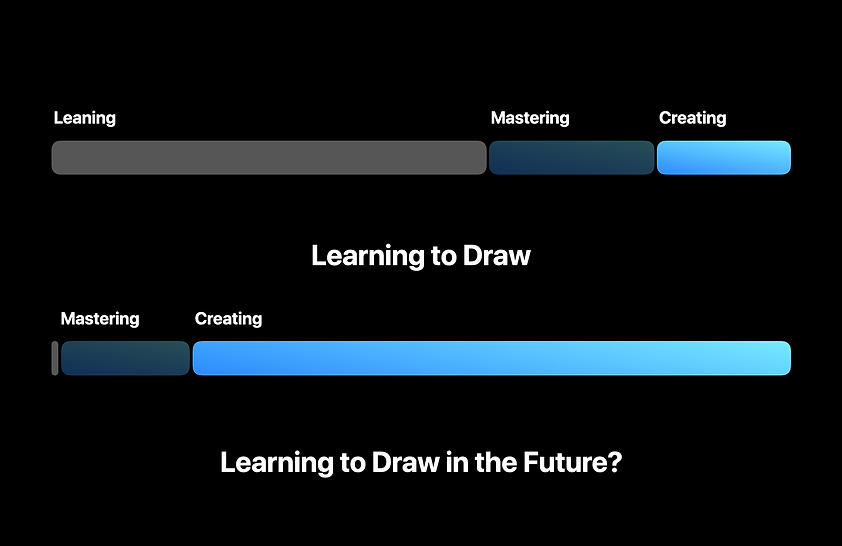
[Fig. 1] The process of learning a skill without and with a brain-machine.